

THANK YOU FOR SUBSCRIBING

Weekly Brief
Be first to read the latest tech news, Industry Leader's Insights, and CIO interviews of medium and large enterprises exclusively from Healthcare Tech Outlook


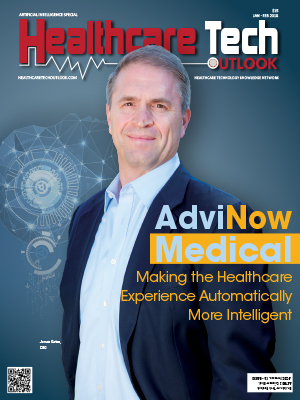
 Ken Ferry, CEO, iCAD
Medical facilities worldwide are adopting Digital Breast Tomosynthesis (DBT) technology as their preferred method for screening and diagnostic mammography for detection of breast cancer. While there are many advantages with DBT such as improving the early detection of breast cancer, there are also some considerable challenges for radiologists. For example, a DBT exam now creates a much larger data set as compared to FFDM and is time consuming and somewhat daunting for radiologists.
A typical 2D digital mammography exam produces four images, while a 3D mammogram- or DBT produces more than a hundred images. With DBT, radiologists find they must spend significantly more time to review and interpret each exam. However, with innovative technologies available today, such as iCAD’s PowerLook Tomo Detection, a first-of-its-kind, concurrent-read cancer detection solution for breast tomosynthesis, radiologists can leverage Artificial Intelligence (AI) and deep learning tools that reduce their DBT interpretation time by an average of 29.2 percent and improve reading workflow.
The software uses a highly sensitive and unique algorithm to rapidly and precisely identify regions of interest in the tomosynthesis data set and blends those regions onto the GE synthetic image. This process results in a single enhanced image that highlights potentially cancerous lesions, creating an efficient and effective overview image and navigation tool for radiologists.
“Built on deep learning technology, PowerLook Tomo Detection is proven to optimize breast tomosynthesis reading efficiency, streamline workflow, and support cancer detection without increasing recalls,” says Ken Ferry, CEO, iCAD.
Since its FDA-approval in March 2017, and CE and Health Canada in 2016, PowerLook Tomo Detection has been implemented by a number of leading breast health provider organizations worldwide. While currently only available with GE Healthcare’s DBT platforms as Enhanced V-Preview, iCAD is developing a multi-vendor solution expected to be available in 2018.
Built on deep learning technology, PowerLook Tomo Detection is proven to optimize breast tomosynthesis reading efficiency, streamline workflow, and support cancer detection without increasing recalls

While early diagnosis is a defining element of successful treatment and survival outcomes, a study by Dr. Richard Benedikt et al. 2017 was conducted to evaluate the radiologist’s reading time, accuracy, and performance. The study found that iCAD’s concurrent DBT CAD solution decreased radiologist reading time by almost 30 percent without sacrificing performance.
Complementing PowerLook Tomo Detection is iCAD’s PowerLook Density Assessment, designed to standardize the assessment and reporting of breast density for FFDM exams, indicative of risk for developing breast cancer. In addition, iCAD’s PowerLook Mammo Detection serves as an interpretive cancer detection software for 2D mammography, providing a ‘second look’ at suspicious areas.
Furthermore, Xoft, a subsidiary of iCAD, provides Electronic Brachytherapy (eBx) radiation treatment for early-stage breast, endometrial, and skin cancer. Xoft may be provided as part of interoperative radiation therapy (IORT) that allows an early-stage breast cancer patient to undergo lumpectomy, get their dose of radiation, and forgo weeks of follow-up radiation therapy otherwise required.
iCAD intends to continue to develop innovative solutions to support imaging modalities through AI. “Backed by our expertise and investments over the last half a decade in AI, we believe we can extend our solutions beyond breast health into a number of other areas in the imaging space over the coming years,” concludes Ferry, with optimistic determination.
Company
iCAD
Management
Ken Ferry, CEO, iCAD
Description
iCAD is a market leader in advanced breast cancer detection software solutions built on artificial intelligence, that enable radiologists to find breast cancers earlier while improving reading workflow.

iCAD News
iCAD and CancerIQ Announce Partnership to Integrate AI-Enabled Technology With Best-in-Class Risk Assessment and Care Management Platform Offering A Comprehensive Breast Health Care Solution
iCAD Showcases New ProFound Cloud, Enhanced ProFound Detection Workstation Features and New Strategic Partnerships at SBI Annual Symposium
• ProFound Cloud, powered by Google Cloud architecture and Google’s Health AI innovations, redefines accessibility to critical insights, empowering radiologists in early breast cancer detection
• New partnership with Densitas provides end-to-end breast health solution ensuring every aspect of a woman’s breast health journey is addressed
• Enhanced ProFound Detection Workstation features streamline mammogram interpretation for radiologists
NASHUA- iCAD, Inc. (NASDAQ: ICAD), a global leader in clinically proven AI-powered cancer detection solutions, announced today it will showcase its ProFound Breast Health Suite of AI solutions, including the newly released ProFound Cloud, powered by Google Cloud and Google Health AI architecture, while also highlighting its recently announced partnership with Densitas®, a global leader in AI solutions for breast cancer screening, at the Society for Breast Imaging (SBI) annual symposium, April 11-14 in Montreal, Canada. In addition, iCAD will feature its recent release of the ProFound Detection Workstation features for streamlined mammogram interpretations in booth #512.
“We’re excited to highlight our recent notable advancements at the SBI annual symposium this year,” said Dana Brown, President and CEO of iCAD. “With the recent introduction of the ProFound Cloud, powered by Google’s innovative technology, we’re ensuring that critical insights are readily accessible to empower radiologists in the early detection of breast cancer.
“Our partnership with Densitas, who provides mammography facilities with actionable, evidence-based intelligence to capture quality images, combined with iCAD’s ProFound Breast Health Suite that points radiologists toward prioritized areas of concern on mammograms,” continued Brown, “patients are the ultimate beneficiaries of our combined suite of offerings which facilitate more holistic breast health solutions. Together with ProFound Cloud and our latest ProFound Detection workstation update, clinicians are empowered with faster, more accurate ways to pinpoint areas of concern and enhance patient outcomes.”
SBI attendees can also view a demonstration of ProFound Cloud, a secure method of transporting and processing mammography screening data between imaging sources. ProFound Cloud, which runs on Google Cloud and Google Health AI architecture, allows for processed data to be seamlessly delivered to systems that utilize AI outputs, including mammography review workstations, PACS, and image and data storage systems.
Visitors to the iCAD booth will also be able to witness the new advanced workstation features for ProFound Detection for both 2D and 3D mammography in its latest V3 Service Pack update. Designed to enhance the readability of iCAD results by limiting lesion marks to three per image and color-coding key findings on workstation displays, this update ensures that radiologists are directed toward the most critical information based on level of suspicion, thus heightening the efficiency of the screening process.
• New partnership with Densitas provides end-to-end breast health solution ensuring every aspect of a woman’s breast health journey is addressed
• Enhanced ProFound Detection Workstation features streamline mammogram interpretation for radiologists
NASHUA- iCAD, Inc. (NASDAQ: ICAD), a global leader in clinically proven AI-powered cancer detection solutions, announced today it will showcase its ProFound Breast Health Suite of AI solutions, including the newly released ProFound Cloud, powered by Google Cloud and Google Health AI architecture, while also highlighting its recently announced partnership with Densitas®, a global leader in AI solutions for breast cancer screening, at the Society for Breast Imaging (SBI) annual symposium, April 11-14 in Montreal, Canada. In addition, iCAD will feature its recent release of the ProFound Detection Workstation features for streamlined mammogram interpretations in booth #512.
“We’re excited to highlight our recent notable advancements at the SBI annual symposium this year,” said Dana Brown, President and CEO of iCAD. “With the recent introduction of the ProFound Cloud, powered by Google’s innovative technology, we’re ensuring that critical insights are readily accessible to empower radiologists in the early detection of breast cancer.
“Our partnership with Densitas, who provides mammography facilities with actionable, evidence-based intelligence to capture quality images, combined with iCAD’s ProFound Breast Health Suite that points radiologists toward prioritized areas of concern on mammograms,” continued Brown, “patients are the ultimate beneficiaries of our combined suite of offerings which facilitate more holistic breast health solutions. Together with ProFound Cloud and our latest ProFound Detection workstation update, clinicians are empowered with faster, more accurate ways to pinpoint areas of concern and enhance patient outcomes.”
SBI attendees can also view a demonstration of ProFound Cloud, a secure method of transporting and processing mammography screening data between imaging sources. ProFound Cloud, which runs on Google Cloud and Google Health AI architecture, allows for processed data to be seamlessly delivered to systems that utilize AI outputs, including mammography review workstations, PACS, and image and data storage systems.
Visitors to the iCAD booth will also be able to witness the new advanced workstation features for ProFound Detection for both 2D and 3D mammography in its latest V3 Service Pack update. Designed to enhance the readability of iCAD results by limiting lesion marks to three per image and color-coding key findings on workstation displays, this update ensures that radiologists are directed toward the most critical information based on level of suspicion, thus heightening the efficiency of the screening process.
AI's Arrival: Redefining Breast Cancer Detection
Dana Brown, iCAD's president, chairman and CEO, shares how the company is changing the way we think about breast cancer detection. Brown gives us an update on the partnership with Google. Plus, she talks about her time at Susan G. Komen and how cancer detection has changed throughout the years.
iCAD is changing the way we look at cancer detection. By employing the use of artificial intelligence, the company is creating solutions that enable medical providers to accurately and reliably detect cancer earlier and improve patient outcomes.
Dana Brown, who began her tenure as president and CEO of iCAD in March of 2023, talks about what's next for the company and sheds some light on a partnership with Google.
Here is a transcript of the conversation.
Omar : How are you?
Dana: Great. Thanks for having me.
Omar: I'm doing well, just a bit sleep-deprived with a newborn at home, but otherwise, all good.
Dana: Congratulations.
Omar: Thank you. So, Dana, it's been over a year since you took the reins at iCAD. How has the journey been so far?
Dana: Better than I expected, honestly. I joined ICAD's board over two years ago, initially thinking it was my dream role. But I saw an opportunity to contribute more directly given my background in cloud technologies and breast health. Jumping in has been fantastic—the team is great, and seeing our solutions in action, not just on paper, has been incredibly rewarding.
Omar: That's wonderful to hear. Before we dive into iCAD, let's talk about your time at Susan G. Komen. Can you share about your role there?
Dana: Sure, at Susan G. Komen, I served as the chief strategic and operations officer for nearly five years. My focus was enhancing direct patient engagement, ensuring initiatives like helplines, financial aid, and support resources were impactful and accessible. It was about making sure Komen's efforts directly benefited patients throughout their breast cancer journey.
Omar: How have your experiences at Komen influenced your approach at iCAD?
Dana: Three main takeaways: continuous learning, particularly in management and collaboration; leveraging technology like EMRs and research registries to enhance patient care; and fostering a culture of innovation, crucial for developing effective solutions in breast health.
Omar: It sounds like a wealth of knowledge to bring to iCAD. Speaking of which, let's touch on iCAD's use of AI in breast cancer detection. How is AI reshaping mammography?
Dana: AI has revolutionized mammography by enhancing accuracy and efficiency. Unlike human eyes, AI processes data at a granular level, making it a reliable second opinion for radiologists. Beyond cancer detection, we're exploring applications like detecting breast arterial calcification, offering a more holistic view of a patient's health.
Omar: That's impressive—AI as a precision tool in healthcare. Is it making mammogram results more understandable for patients?
Dana: Currently, AI primarily aids clinicians by providing trusted decision support. However, patients are becoming aware of AI's role and its potential to offer them clearer, faster insights into their health—a promising development we're exploring further.
Omar: Moving forward, iCAD has partnered with Google Health. What can you tell us about this collaboration?
Dana: Our collaboration with Google Health spans two key initiatives: integrating our technology into Google's cloud infrastructure for seamless healthcare operations, and jointly developing advanced AI algorithms. This includes creating an AI-powered second reader for mammograms, aiming to streamline diagnosis and reduce turnaround times, and addressing the shortage of radiologists globally.
Omar: That's a significant step forward in leveraging technology for healthcare efficiency. While we await regulatory clearances, how do you see AI influencing patient care in the future?
Dana: AI is empowering patients with knowledge and enabling more informed healthcare decisions. It's part of a broader trend towards patient empowerment, where individuals actively engage in their health management—a positive shift we're committed to advancing at ICAD.
Omar: Your insights are invaluable. Looking back at your career journey, did you foresee technology playing such a pivotal role in healthcare?
Dana: Not initially, but my early interest in combining technology and sociology guided me towards leveraging tech for social impact. It's been a fulfilling journey seeing technology evolve from tax software to AI-driven healthcare solutions, empowering both patients and providers.
iCAD is changing the way we look at cancer detection. By employing the use of artificial intelligence, the company is creating solutions that enable medical providers to accurately and reliably detect cancer earlier and improve patient outcomes.
Dana Brown, who began her tenure as president and CEO of iCAD in March of 2023, talks about what's next for the company and sheds some light on a partnership with Google.
Here is a transcript of the conversation.
Omar : How are you?
Dana: Great. Thanks for having me.
Omar: I'm doing well, just a bit sleep-deprived with a newborn at home, but otherwise, all good.
Dana: Congratulations.
Omar: Thank you. So, Dana, it's been over a year since you took the reins at iCAD. How has the journey been so far?
Dana: Better than I expected, honestly. I joined ICAD's board over two years ago, initially thinking it was my dream role. But I saw an opportunity to contribute more directly given my background in cloud technologies and breast health. Jumping in has been fantastic—the team is great, and seeing our solutions in action, not just on paper, has been incredibly rewarding.
Omar: That's wonderful to hear. Before we dive into iCAD, let's talk about your time at Susan G. Komen. Can you share about your role there?
Dana: Sure, at Susan G. Komen, I served as the chief strategic and operations officer for nearly five years. My focus was enhancing direct patient engagement, ensuring initiatives like helplines, financial aid, and support resources were impactful and accessible. It was about making sure Komen's efforts directly benefited patients throughout their breast cancer journey.
Omar: How have your experiences at Komen influenced your approach at iCAD?
Dana: Three main takeaways: continuous learning, particularly in management and collaboration; leveraging technology like EMRs and research registries to enhance patient care; and fostering a culture of innovation, crucial for developing effective solutions in breast health.
Omar: It sounds like a wealth of knowledge to bring to iCAD. Speaking of which, let's touch on iCAD's use of AI in breast cancer detection. How is AI reshaping mammography?
Dana: AI has revolutionized mammography by enhancing accuracy and efficiency. Unlike human eyes, AI processes data at a granular level, making it a reliable second opinion for radiologists. Beyond cancer detection, we're exploring applications like detecting breast arterial calcification, offering a more holistic view of a patient's health.
Omar: That's impressive—AI as a precision tool in healthcare. Is it making mammogram results more understandable for patients?
Dana: Currently, AI primarily aids clinicians by providing trusted decision support. However, patients are becoming aware of AI's role and its potential to offer them clearer, faster insights into their health—a promising development we're exploring further.
Omar: Moving forward, iCAD has partnered with Google Health. What can you tell us about this collaboration?
Dana: Our collaboration with Google Health spans two key initiatives: integrating our technology into Google's cloud infrastructure for seamless healthcare operations, and jointly developing advanced AI algorithms. This includes creating an AI-powered second reader for mammograms, aiming to streamline diagnosis and reduce turnaround times, and addressing the shortage of radiologists globally.
Omar: That's a significant step forward in leveraging technology for healthcare efficiency. While we await regulatory clearances, how do you see AI influencing patient care in the future?
Dana: AI is empowering patients with knowledge and enabling more informed healthcare decisions. It's part of a broader trend towards patient empowerment, where individuals actively engage in their health management—a positive shift we're committed to advancing at ICAD.
Omar: Your insights are invaluable. Looking back at your career journey, did you foresee technology playing such a pivotal role in healthcare?
Dana: Not initially, but my early interest in combining technology and sociology guided me towards leveraging tech for social impact. It's been a fulfilling journey seeing technology evolve from tax software to AI-driven healthcare solutions, empowering both patients and providers.

• Partnership to expand access to ProFound Breast Health Suite and CancerIQ’s platform to benefit patients across thousands of facilities
NASHUA - iCAD, Inc. (NASDAQ: ICAD), announced a new partnership to create a best-in-class breast health care solution. The partnership will provide a seamless way to uniquely inform physicians and patients of cancer risk (including lifetime, genetic, and AI-detected near-term risk), identify breast cancer at earlier stages, when treatments work best, and increase patient adherence to their personalized care plans.
Together, these solutions will combine elements from iCAD’s artificial intelligence-enabled ProFound Breast Health Suite with CancerIQ’s software and services, giving users a 2.4x more accurate prediction of breast cancer risk by combining AI-informed 1- or 2-year risk with lifetime risk, as well as a unique care management and patient activation workflow solution proven to more than double adherence to payer-supported supplemental screening recommendations.
“This partnership will streamline how patients and physicians use our collective health data to schedule preventative screenings and manage breast health care in a way that will save lives,” said Dana Brown, president and CEO of iCAD. “We look forward to a long-term relationship with CancerIQ that will create meaningful, actionable information in terms of proactive and personalized care benefiting both medical providers and the patients they serve.”
CancerIQ helps providers traverse the challenges of managing cancer risk assessments to offer more personalized, evidence-based care pathways that lead to early cancer detection and prevention. Integrated with leading EHR workflows, CancerIQ’s lifetime risk calculator offers Tyrer-Cuzick scores (7 and 8), Gail, and NCCN guidelines. Coupled with iCAD’s Density and short-term AI risk from the ProFound Suite, clinicians will have a clear picture of a patient’s future breast cancer risk and if breast cancer is detected today.
“CancerIQ is on a mission to bring the latest innovations to a broader population of providers so they can stay ahead of cancer. Pairing our platform with iCAD’s AI-enabled product suite helps fulfill that mission and bring a more complete solution to the market,” said Feyi Ayodele, co-founder and CEO of CancerIQ.
The partnership aims to combine CancerIQ’s lifetime risk score and genetic risk data with iCAD’s ProFound Density assessment score and ProFound Risk, the only AI-informed short-term cancer risk assessment that offers the industry’s highest AUC for providing a one-year future risk estimation based on a 2D or 3D screening mammogram. The ProFound Risk platform has a proven track record of predicting risk of breast cancer 2.4x more accurately in the next year than traditional lifetime risk models1. iCAD’s ProFound Density Assessment will also become available, using mammography images to categorize breast density, leading to personalized patient care plans with supplemental screenings and a custom schedule.
“There’s incredible power in blending our respective solutions to create a product that is unmatched in the market,” said Michelle Strong, iCAD’s COO.
The partnership announcement coincides with iCAD’s appearance at the Radiological Society of North America (RSNA) annual meeting in Chicago as the company unveils new research using AI in breast cancer risk detection and heart disease.